
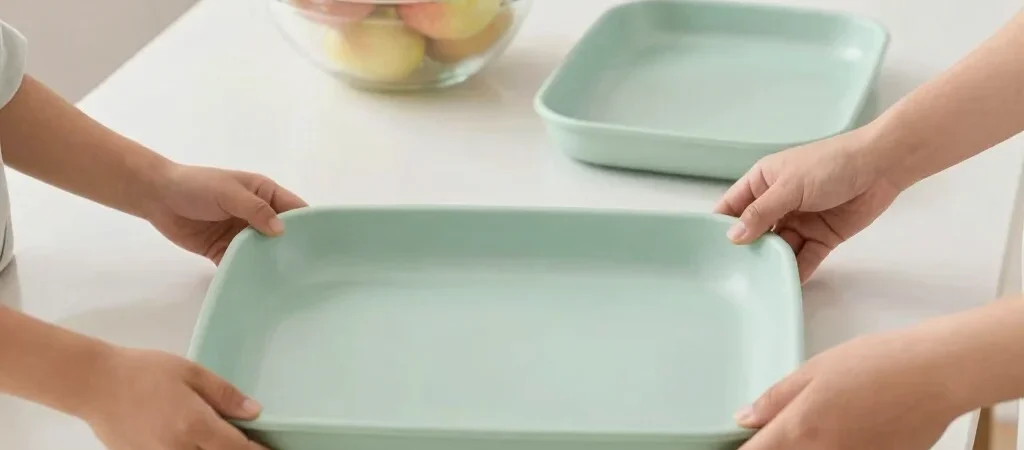
While a grown-up sorts fruit or sets the table, a child can line up safe, everyday objects and start noticing how many there are. The kitchen offers real things to count and compare, without needing a worksheet or special kit. Keep the activity away from hot surfaces, sharp tools, and anything small enough to be a choking hazard.
Count What Is Already There
Ask a child to count the apples in a bowl, the napkins on the table, or the large plastic cups being put away. If counting aloud gets tricky, move one object at a time into a new row so each item is counted once. For a child who is ready, ask how many there might be before counting together.
Compare Without Rushing
Place two groups of safe objects side by side and ask which has more, which has fewer, or whether they look equal. The groups do not need to be perfectly arranged; moving items into pairs can help make the comparison visible. If the answer is uncertain, let the child check rather than turning the question into a speed challenge.
Spot a Pattern Together
Make a simple repeating pattern with larger items, such as spoon, napkin, spoon, napkin, and invite the child to choose what comes next. Then switch roles and let them create a pattern for you to continue. Two or three minutes is enough; everyday number play can end when the meal or the child’s interest calls.